What Is Left When the Artificial Intelligence Is Switched Off?
A good mark on work done with an assistant shows that the work was good. It does not show what the student will still know next term without the assistant, and researchers have only started to measure that.
Good Work Is Not the Same as Learning
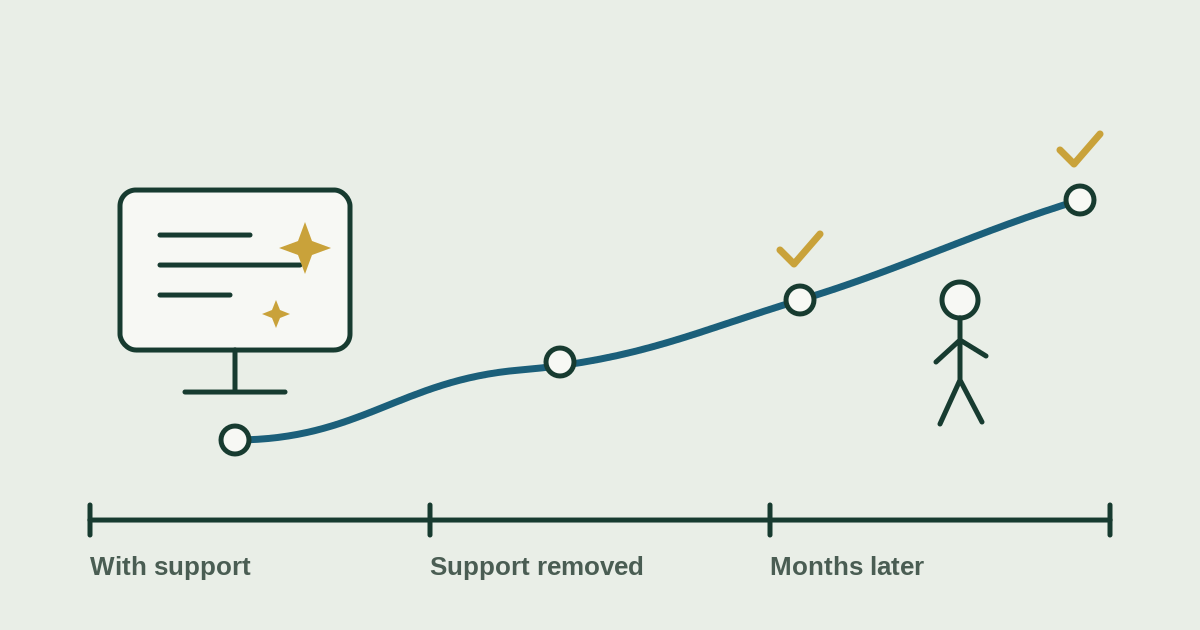
Think of a satnav. You reach the right address every time, yet switch it off and you may have no idea how to get there. Learning with an Artificial Intelligence assistant can work the same way. The essay is clearer, the code runs, the answers are right. Whether the student could do it again alone, a month later, is a separate question, and a gradebook cannot tell the two apart.
For a teacher, the difference matters a great deal. A course can look better on paper while students learn less, or it can look the same while they learn more. Only a check made later, without the tool, shows which one happened.
Researchers Have Started to Ask
In October, at the Cambridge AI in Education Summit, Tina Austin of UCLA launched a group of researchers to follow students over time and find out. The group is called the UnBlooms Longitudinal Research Consortium, and according to Austin more than 40 institutions have shown interest in joining.
In plain words, they want to answer three questions.
- Does students' own thinking get better, or only the work they hand in?
- What can students still do when the tool is taken away?
- How can a teacher tell a student's own understanding apart from the help the tool gave?
What We Know So Far
Very little, and the researchers say so. The group uses a short questionnaire on how students think about their own thinking, called the Metacognitive Awareness Scale. Early work with it points to "preliminary shifts" in how students treat an answer from Artificial Intelligence, from accepting it as it comes towards checking it and questioning their own work. Austin is clear that this needs further validation and longer-term evidence. No study length, sample size or member institutions have been published yet, so there are no results to report.
What You Can Do in Your Own Course
A first answer does not require a large study. The following steps are a good starting point:
- Later in the term, set one task that students complete without the assistant and compare it with the work they did with it.
- Add a questionnaire on how students plan, check and judge their own work, since the mark alone does not show this.
- If your course platform records when students used the assistant, decide in advance which records you will analyse and inform the students accordingly.
- Decide before the course starts when you will check again (a week later, at the end of term or a year on), so that the comparison is fair.
Our Take
The question is the right one, and it will take years to answer well across many schools and universities. Courses that bring in an assistant this year do not have to wait for that. A check without the tool, planned from the start, already shows whether students are learning or only producing better work.